September
2026
SBR, NBR, or EPDM? A Guide to Rubber Compounds for the Right Solutions
The correct selection of rubber seals in industrial and mechanical engineering directly determines the reliability of the entire mechanism. An inappropriate material specification causes operating media leaks, unexpected accidents, and costly production downtime. Various synthetic rubbers and the rubber sheeting produced from them exhibit a specific chemical structure that defines their ultimate physical limits.
Fundamentals of Material Physics: What are Elastomers and How are They Produced?
Elastomers (rubber materials) are among the most popular sealing materials due to their excellent elasticity. Even under long-term compression, they can return to their original shape and perfectly seal a joint. The key to success is the correct chemical composition of the rubber compound – this determines how the seal will resist pressure, aggressive media, and natural aging.
The raw rubber compound goes through several critical processing phases in our plant:
- Calander line: Processes the rubber compound into sheets of the required thickness.
- Continuous vulcanization: Replaces traditional intermittent pressing, utilizing Rotocure technology to create a perfectly continuous elastomer network with an absence of joints preventing localized weak points.
- Inspection and cutting table: Ensures precise edge trimming and final material thickness measurement.
A correctly selected technological process and adherence to vulcanization regulations, time, temperature, and pressure guarantee uniform mechanical properties. As a result, our products exhibit maximum material stability even under the most demanding stress conditions.
Calander Line and Continuous Vulcanization vs. Material Formats
Our modern production of rubber sheeting via Rotocure continuous vulcanization utilizes the continuous pressure of an endless steel belt. This advanced technology eliminates any visible joints throughout the entire volume of the infinite rolls and prevents the formation of microscopic leaks. Precise processing on the Calander line perfectly homogenizes the compound and ensures a uniform thickness tolerance at every point.
The following table compares optimal elastomer formats and their internal structure for specific industrial applications:
|
Format / Elastomer Structure |
Main Technical Advantages |
Typical Industrial Application |
|
Rubber sheeting |
Material stability, processing precision, uniform structure, compactness |
Production of technical seals, flanges, CNC die-cutting |
|
High wear resistance, long seamless sections |
Anti-slip floors, industrial halls, loading ramps |
|
|
High dielectric strength, certified safety |
Substations, electrical switchboards, and high voltage areas |
The choice between these formats directly affects the efficiency of subsequent processing and sealing capability. Furthermore, the correct format choice minimizes material waste during cutting.
SBR Rubber – The Economic Standard for General Use
Styrene-butadiene rubber represents a proven industrial classic and a basic economic pillar for applications without special chemical requirements. SBR rubber, combined with various synthetic and NR rubbers, excels in outstanding resistance to mechanical abrasion, dynamic stress, and mechanical wear under normal operating conditions. In our portfolio, this material serves as a universal and affordable solution for stable static applications.
Moreover, our high-strength rubber sheeting SBR 10 MPa (type 7749) safely transfers extreme forces in dynamically loaded nodes. The material maintains reliable physical properties in a broad environment and protects technology from vibration (vibration isolation).
Technical Properties, Product Portfolio, and Fire Safety of SBR
Our portfolio includes proven types that respond flexibly to your requirements in industrial practice. For applications in enclosed spaces or buildings, we must also strictly consider safety aspects regarding flame propagation.
We supply these materials in the following modifications and configurations:
- General use series designated 7993, 7759, and 9035 are designed for standard flat flange annuli.
- High-strength rubber sheeting SBR 10 MPa (type 7749) reliably withstands strong dynamic loads and mechanical shocks.
- Anti-slip rubber flooring in a fine ribbed design ensures dimensional stability and safe walking in non-aggressive interiors.
- Flame retardant and self-extinguishing variants (S8 – coin pattern) meet strict fire protection conditions.
In terms of building fire safety, our specially modified compounds achieve the EN 13501-1 classification (Cfl-s1). This parameter guarantees that the material contributes minimally to fire and does not release toxic smoke. Thanks to this, we protect not only the technologies themselves but also the health of personnel in the operation.
NBR Rubber – Unbeatable Oil Resistant Rubber
In environments with regular contact with petroleum products, nitrile butadiene rubber is the only correct choice. This oil resistant NBR rubber exhibits excellent resistance to industrial lubricants, hydraulic fluids, diesel, and motor oils. Our compounds maintain low compression set and high tensile strength even when permanently immersed in non-polar media.
The following table specifies the properties of the two main performance series we produce for varying degrees of chemical stress:
|
Product Series |
Temperature Range |
Optimal Operating Media |
Typical Industrial Application |
|
-25 °C up to +100 °C |
Mineral oils, greases |
Flat seals for gearboxes and engine flanges |
|
|
-25 °C up to +100 °C |
Gasoline / petrol, isooctanes, diesel |
Seals for fuel pumps and refinery pipelines |
A correctly selected oil resistant rubber prevents the diffusion of hydrocarbons into the elastomer grid, preventing the destruction of macromolecular bonds. For demanding operations where there is a risk of floor contamination by oils, we also apply these compounds to our anti-slip rubber flooring. This ensures comprehensive technology protection and worker safety in the workplace.
EPDM Rubber – Specialist in Heat Resistant Sealing and Exteriors
Ethylene propylene diene monomer rubber represents a top-tier solution for applications exposed to demanding weathering and high temperatures. This EPDM rubber owes its properties to a fully saturated polymer chain that does not contain unsaturated double bonds. Thanks to this, the material successfully withstands photo-oxidative attacks, does not lose its elasticity, and does not crack even under long-term stress.
Our low-temperature and high-temperature compounds offer the following technical advantages and application variants:
- The use of EPDM rubber in exteriors guarantees long-term weathering resistance, ozone resistance, and UV radiation resistance.
- Top chemical resistance allows safe contact with hot water, low-pressure steam, acids, and alkalis.
- White food grade rubber sheeting EPDM-NR (type 7816) meets strict criteria for direct contact with media in the food industry.
- Performance series EPDM96, EPDM95, and EPDM15 offer varying degrees of hardness for optimal mechanical adaptation.
For food processing plants and filling lines, we supply compounds that strictly comply with European legislation. It meets the requirements of the article 3 of Regulation (EC) No. 1935/2004 of the European Parliament and of the Council on materials and articles intended to come into contact with food. This certified material does not release any harmful substances into flowing media and preserves the sensory properties of products. Our heat resistant EPDM sealing thus covers a wide range of needs from heavy industry to hygienically clean environments.
Special Rubber Compounds for Specific Requirements
When addressing specific and custom requirements, standard types of elastomers often reach their material limits. Our development team therefore designs specially formulated compounds with precisely targeted physical properties for extreme conditions. We deploy these unique materials wherever, in addition to basic sealing, we also require extraordinary wear resistance, vibration damping, or high electrical safety.
A prime example of our own recipe is the wear resistant rubber for conveyor wiper blades designated as type 7750. This compound combines natural rubber and BR rubber with a high proportion of cis-structure, giving it extreme abrasion resistance of max. 120 mm³. For the High voltage sector, we supply special electrical insulating matting for substations with strict IEC 61111:2009 certification. Our products reliably protect workers' health against high voltage and secure strategic areas.
Engineering Methodology: How to Choose the Right Industrial Seal?
The correct and safe design of rubber sheeting in industrial practice requires a comprehensive evaluation of all physical and chemical influences. A superficial approach to elastomer selection almost always leads to premature material aging and sudden mechanical failure. Therefore, for every design, our engineering team applies a strict methodological analysis that systematically examines six key operating parameters.
This proven STAMPS decision framework includes the following basic criteria:
- S (Size): Precise dimensions of the seal (inner/outer diameter) adapted to the metal flange and bolt spacing. This includes choosing the correct thickness: at higher pressures, it is better to choose a thinner sheet (e.g., 1.5–2 mm) because thicker rubber has a larger area for the pressure to act upon, increasing the risk of it being pushed out of the joint.
- T (Temperature): The temperature profile of the system, including minimum, operating, and short-term peak temperatures.
- A (Application): The method of deployment, distinguishing between static clamping in flanges and the dynamic movement of shafts and pistons.
- M (Media): The chemical compatibility of elastomers with the flowing fluid, with an emphasis on the presence of trace impurities.
- P (Pressure): Operating pressure and the risks associated with a sudden pressure drop linked to the explosive decompression of gases in the rubber structure.
- S (Speed): Friction speeds at the dynamic edges of conveyor belts, which generate dangerous localized heat.
A thorough examination of these points prevents routine errors and the overlooking of hidden operational risks. Every medium and every pressure peak directly affects the internal bonds of the used rubber sheeting. A systematic check of all operating variables is thus the only reliable way to ensure the long service life of the rubber sheeting.
Choose the Technically Correct Seal for Your Operation
The use of an unsuitable elastomer leads to premature material aging, hazardous leaks, or unnecessarily expensive production downtime. BOGUMA offers proven and certified industrial seals, top-quality rubber sheeting, and highly durable anti-slip rubber flooring of the highest European quality, directly from our plant in Bošany.
Thanks to the modern technologies of continuous vulcanization via Rotocure, we deliver products that reliably handle even the most demanding conditions. Efficient engineering solutions save your operating costs and maximize technology safety. Correctly dimensioned material properties eliminate the risks of failures on pipeline routes or valves. Consulting with our professional team of rubber specialists guarantees that the selected product will exactly meet the pressure, temperature, and chemical demands of your operation.
Do not gamble with material selection. Use our professional industrial sheeting configurator, where you can easily select the parameters of existing certified products, or consult your project directly with our company's engineers.
Frequently Asked Questions (FAQ)
What is the main difference between SBR, NBR, and EPDM rubber?
The main difference lies in their chemical resistance and the temperature range they can withstand in operation. SBR serves as a mechanical standard for general use without oils, NBR excels as an oil resistant material against petroleum products, and EPDM excels in exteriors and upon contact with hot steam.
Which rubber compound is best for contact with gasoline and diesel?
For direct contact with automotive petrol and diesel, we supply special NBR rubber with an increased acrylonitrile content. The highest chemical reliability in this environment (resistance to gasoline) is demonstrated by our specific performance series NBR72.
Can I use EPDM rubber in an environment with mineral oils?
Using EPDM rubber in an oil environment is not possible because this material is completely incompatible with mineral oils. Petroleum substances rapidly penetrate its structure, causing massive swelling and loss of sealing functionality.
What does the designation 1T or 2T mean for rubber sheeting?
These technical abbreviations indicate the exact number of reinforcement layers (textile plies) integrated directly into the core of the rubber sheeting. The textile insert significantly increases overall dimensional stability.
What are the properties of PARA QUALITY rubber and when is it used?
This unique material based on pure natural rubber excels in extreme elasticity and low hardness. We use it mainly for effective vibration isolation, soundproofing, and for joints exposed to lower operating pressures.
What is the STAMPS methodology and what is it used for?
The STAMPS methodology is a comprehensive engineering framework for the flawless and correct selection of the optimal sealing material. The acronym systematically defines six critical areas ranging from dimensions and temperatures to chemical media and pressures.
What threatens the seal during a phenomenon called "explosive decompression"?
During a sudden pressure drop in the system, gases absorbed in the pores of the elastomer begin to expand faster than they can escape. This rapid physical process literally tears the internal structure of the rubber apart, causing the immediate destruction of the seal.
Which rubber should be chosen for the food industry?
In food processing facilities, you must unconditionally use our certified white food grade EPDM-NR rubber sheeting of type 7816. This special material meets the requirements of the article 3 of Regulation (EC) No. 1935/2004 for direct contact with food.
How does electrical insulating matting protect workers in electrical engineering?
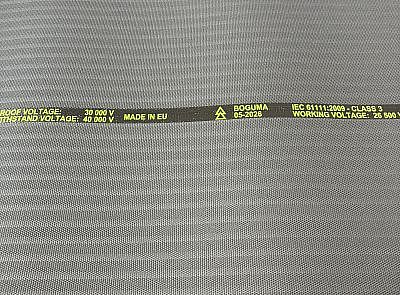
These certified dielectric mats serve as reliable individual protection for personnel against dangerous electric shock (reduces step and touch voltage). Our highest product Class 4 is tested for a proof voltage of up to 40,000 V and ensures safety in substations by creating a safe standing zone.
Why is continuous vulcanization of rubber better than conventional pressing?
This continuous vulcanization process via Rotocure guarantees absolute uniformity of all physical and mechanical properties with an absence of joints throughout the entire infinite roll. The result is perfectly smooth sheets with a precise surface that completely eliminates the risk of microscopic leaks and high residual stress.
.png) Meet Noel – Our New Sales Team Member for Latin America
Meet Noel – Our New Sales Team Member for Latin America
 International Standards for Electrical Insulating Protection: Technical Overview of IEC and ASTM Standards