April
2026
The Complete Guide to Electrical Insulating Blankets (EIP): Safety, Standards & Industrial Use
At BOGUMA, we understand that safety during live-line work goes beyond simple regulatory compliance. High-quality electrical insulating blankets provide a critical physical barrier between the worker and dangerous electrical charges. These flexible protective tools eliminate the risk of accidental contact with energized parts of electrical equipment. Every product in our facility undergoes rigorous testing to ensure it reliably protects your employees in demanding industrial environments.
Choosing the correct insulating blanket fundamentally impacts the efficiency and safety of maintenance operations. Our experience confirms that certified materials according to the IEC 61112:2009 standard guarantee the necessary dielectric strength. These products simplify work in cramped switchboard spaces where rigid barriers often fail to provide adequate coverage. Investing in proven protection from a direct manufacturer minimizes downtime and significantly raises the overall safety level at your workplace.
Electrical Insulating Blankets: Voltage Classes, ASTM & IEC Standards Explained
Our technical team ensures that every blanket meets the highest global safety benchmarks before it leaves our warehouse. We manufacture these products to align strictly with the IEC 61112:2009 international standard for electrical insulation. This certification guarantees that the material maintains its dielectric properties even under mechanical stress or environmental pressure. Understanding these standards helps you select the right level of protection for your specific high-voltage environment.
Our product range covers various voltage requirements to suit different industrial needs:
- Class 0: Provides safety for low-voltage applications up to 1,000V AC.
- Class 1: Protects workers operating near equipment up to 7,500V AC.
- Class 2: Offers robust insulation for medium-voltage tasks up to 17,000V AC.
- Class 3: Withstands higher electrical pressures up to 26,500V AC.
- Class 4: Delivers maximum protection for heavy-duty work up to 36,000V AC.
Compliance with these classes prevents catastrophic failures during live electrical maintenance. We also categorize blankets based on their resistance to environmental factors like acid or ozone. Proper classification ensures that the rubber compound does not degrade prematurely in harsh chemical settings. Trusting certified standards remains the only way to guarantee a zero-accident policy in your facility.
Why Electrical Insulating Blankets Are Non-Negotiable for Safety
Electrical safety depends on a multi-layered approach where every piece of equipment plays a vital role. In our production facility, we prioritize dielectric strength because it prevents the passage of lethal current to the worker. These blankets act as a portable shield that wraps around conductors or oddly shaped components. They provide a level of flexibility that traditional rigid shields simply cannot offer during field repairs.
Selecting the right safety tool requires a clear understanding of the protection levels each class provides. The following table summarizes the maximum working voltages for our standard insulating blankets:
|
Class |
Maximum Working Voltage (AC) |
Maximum Working Voltage (DC) |
|
Class 0 |
||
|
Class 1 |
7,500 V |
11,250 V |
|
Class 2 |
17,000 V |
25,500 V |
|
Class 3 |
26,500 V |
39,750 V |
|
Class 4 |
36,000 V |
54,000 V |
Our blankets significantly reduce the risk of arc flash by covering exposed live parts. This protective layer prevents tools or hardware from accidentally bridging two phases. Using these blankets demonstrates a commitment to a high-safety culture within your technical teams. They safeguard your most valuable assets while ensuring your operations comply with international labor safety laws.
Voltage Classes Demystified (Class 0–4)
The classification system serves as a roadmap for matching EIP protection levels to specific electrical hazards. We manufacture each class with a specific thickness and rubber composition to handle designated voltage thresholds. Using a blanket with a lower rating than the circuit voltage creates an immediate and deadly risk. Our engineering team labels every blanket clearly to prevent any confusion during high-pressure maintenance tasks.
Higher classes provide thicker insulation but still maintain the flexibility required for wrapping around complex equipment. We recommend that safety officers always verify the nominal voltage of the installation before selecting the appropriate Class 0 through 4 blanket. This proactive approach ensures that the dielectric barrier remains intact during the entire duration of the work. Proper class selection saves lives and protects expensive infrastructure from accidental short circuits.
Class 0 – up to 1,000V (Boguma EIP0)
Our BOGUMA EIP0 model serves as the primary defense for low-voltage systems and residential electrical work. We design this specific blanket to handle up to 1,000V AC with a focus on maximum maneuverability. Technicians appreciate the lightweight nature of this product when working with standard switchgear or terminal blocks. It offers the perfect balance between high dielectric strength and the tactile feedback needed for precise movements.
The EIP0 blanket excels in various everyday electrical scenarios including:
- Residential installations: Protects electricians during panel upgrades or circuit repairs.
- Commercial maintenance: Ideal for servicing HVAC systems and lighting ballasts.
- Industrial control loops: Safeguards technicians working on 400V or 690V machinery.
- Telecommunications: Provides a safe barrier near low-voltage power supplies.
We manufacture the EIP0 series with high-quality elastomers that resist tearing during normal use. This durability ensures that the blanket remains a reliable part of your toolkit for many years. Despite its thinner profile, it meets every requirement of the IEC 61112:2009 standard for Class 0 equipment. It represents our most versatile solution for general electrical safety across multiple industries.
Difference between Category A (acid resistant) and Z (ozone resistant)
Our chemical engineers develop specific rubber compounds to withstand various environmental stressors found in industrial zones. Standard rubber often degrades when it comes into contact with aggressive chemicals or atmospheric pollutants. We assign specific categories like A or Z to help you identify the blanket's specialized resistance capabilities. Selecting the wrong category leads to premature cracking, which compromises the electrical safety of the entire barrier.
The following table explains the specific environmental resistances according to the IEC 61112 standard:
|
Category |
Resistance Type |
Ideal Environment |
|
Category A |
Acid Resistant |
Chemical plants, battery rooms, and laboratories. |
|
Category Z |
Ozone Resistant |
High-altitude areas or locations with high-voltage discharge. |
|
Category C |
Extremely Low Temperature |
Arctic conditions or industrial refrigeration units. |
|
Category H |
Oil Resistant |
Mechanical workshops and engine rooms. |
We recommend Category Z blankets for most outdoor applications where sunlight and high-voltage equipment generate ozone. This gas causes deep cracks in standard rubber, but our ozone-resistant formula maintains its structural integrity. If your work involves proximity to battery fluids or industrial cleaners, Category A provides the necessary chemical shield. Choosing the correct category ensures that your safety equipment lasts its full intended lifespan.
IEC 61112:2009 vs. Other Standards – What It Means in Practice
Adhering to the IEC 61112:2009 standard ensures that our blankets meet a globally recognized level of quality and safety. This specific benchmark dictates rigorous testing procedures for dielectric strength, puncture resistance, and tensile strength. Other regional standards might exist, but the IEC certification provides a universal language for safety officers worldwide. Our commitment to this standard means that a BOGUMA blanket performs consistently, whether you use it in Europe or on an international project.
In practice, this certification provides the peace of mind that every square centimeter of the material offers the promised protection. We perform electrical tests at much higher voltages than the rated working limit to provide a necessary safety margin. A blanket without this clear certification represents an unknown risk that could fail under actual stress. Following the IEC guidelines remains the most reliable method to ensure that your safety equipment remains a true life-saving tool.
Arc Flash Protection – The Role of Insulating Blankets in a Complete PPE Setup
An arc flash releases a massive amount of thermal energy and pressure in a fraction of a second. We emphasize that insulating blankets serve as a primary physical barrier to prevent the initial spark from occurring. By covering grounded surfaces or adjacent phases, our blankets eliminate the accidental paths that cause these dangerous discharges. They work as a preventive measure that keeps the electrical arc from ever forming during your maintenance tasks.
A complete personal protective equipment (PPE) strategy requires several layers of defense working in harmony:
- Insulating Blankets: Prevent accidental contact and short circuits at the source of the hazard.
- Arc-Rated Clothing: Protects the body from thermal burns if an arc occurs.
- Face Shields and Hoods: Safeguard the eyes and face from intense light and flying debris.
- Insulating Gloves: Ensure the hands remain safe while manipulating energized components.
- Insulated Tools: Reduce the chance of bridging a connection between different potentials.
Our blankets do not replace arc-rated clothing, but they significantly lower the probability of an incident. We recommend using them to shroud any exposed live parts that a technician might touch during a sudden movement. This combined approach creates a safer environment where multiple failsafes protect the worker from human error. Relying on a single piece of equipment is never enough in high-risk electrical environments.
Standards & Safety
In the world of high-voltage engineering, safety depends on the strict verification of material properties. At BOGUMA, we treat every production batch as a critical safety component that must withstand extreme electrical stress. Our internal quality control protocols exceed basic requirements to ensure that no weak spots exist in the rubber matrix. We believe that transparency in testing data empowers our clients to make informed decisions for their specific industrial safety needs.
Our blankets undergo a variety of tests to prove their durability and reliability under pressure. The following table outlines the key performance indicators we monitor during the certification process:
|
Test Parameter |
Objective |
Standard Requirement |
|
Dielectric Strength |
Confirms the voltage at which the rubber breaks down. |
Must exceed the rated class limit. |
|
Tensile Strength |
Ensures the material does not tear when stretched over equipment. |
Minimum 0,7 MPa. |
|
Elongation at Break |
Tests the flexibility of the blanket before it snaps. |
Minimum 400 %. |
While EIP blankets require a tensile strength of 0.7 MPa, our DEK insulating matting is manufactured to withstand a minimum of 12 MPa
Safety officers must verify these certifications before authorizing work on live systems. We provide full documentation for every EIP blanket to simplify your internal audit and compliance processes. Using uncertified or outdated equipment creates an unacceptable liability for any modern enterprise. Staying updated with the latest IEC standards remains the most effective way to protect your team and your reputation.
Electrical Insulating Blankets in Industrial Settings: Transformers, Switchboards & Live Work
Industrial environments present unique challenges that demand versatile and highly durable insulation solutions. We see our blankets used daily in high-density areas where space for maneuvering is extremely limited. Technicians frequently employ these rubber barriers to shroud transformer bushings or open busbars during emergency repairs. The flexibility of the material allows it to conform to irregular shapes that fixed guards cannot cover.
Large-scale switchboards often require temporary isolation of specific sections while the rest of the system remains energized. Our blankets provide a safe way to partition these zones, allowing work to proceed without a total facility shutdown. We emphasize that proper placement of the blanket prevents accidental tool drops from causing catastrophic short circuits. This practical application keeps industrial processes running smoothly while maintaining the highest possible safety margins for the maintenance crew.
Use in Live Electrical Work
Performing maintenance on energized systems requires a disciplined approach and specialized equipment to prevent hazardous contact. We design our blankets to act as a temporary insulator that technicians can quickly deploy over live components. This flexibility allows your team to work safely within the restricted approach boundary of high-voltage installations. By utilizing these barriers, you create a controlled workspace that protects against sudden movements or accidental slips during technical maneuvers.
When your team executes live-line work, they typically use insulating blankets in the following ways:
- Shrouding busbars: Covers exposed conductive rails to prevent phase-to-phase contact.
- Isolating terminals: Wraps around energized connection points during cable replacements.
- Protecting grounded parts: Prevents the worker from becoming a path to ground if they touch a live wire.
- Creating a safe zone: Drapes over nearby equipment to provide a wider margin of error for the technician.
We advocate for the "cover-up" method where every energized part within reach receives its own dedicated rubber shield. This technique eliminates the risk of an accidental arc caused by a tool bridging two different potentials. Our blankets remain supple even in colder weather, ensuring they stay in place without sliding off smooth metal surfaces. Consistent use of these products during live work significantly decreases the frequency of workplace injuries.
Protection Against Accidental Contact with Live Conductors
Accidental contact remains one of the leading causes of electrical injuries in industrial settings. We manufacture our blankets to provide a high-friction surface that stays exactly where the technician places it. This stability is crucial when draping the material over smooth conductors or vertical switchgear components. By creating a physical gap between the worker and the electricity, the blanket ensures that minor mistakes do not turn into fatal accidents.
We categorize the effectiveness of these barriers based on their ability to withstand environmental and mechanical stress. The following table highlights how different blanket properties contribute to preventing accidental contact:
|
Feature |
Safety Benefit |
Practical Application |
|
High Dielectric Strength |
Prevents voltage from jumping through the material. |
Safely covering 10kV busbars. |
|
Slip-Resistant Texture |
Keeps the blanket from sliding off energized parts. |
Vertical installation in cabinets. |
|
High Tear Resistance |
Prevents sharp edges from compromising the barrier. |
Working near jagged metal frames. |
|
Visibility (Bright Colors) |
Clearly identifies the boundaries of the live zone. |
Visual cues for the entire team. |
In our experience, using bright orange or yellow blankets helps workers stay aware of the "hot" zones at all times. These visual reminders work alongside the physical insulation to promote a safer work environment. We suggest securing the blankets with non-conductive clips or pins to ensure they remain immobile during the entire task. This extra step provides the ultimate assurance that the live conductors remain fully shielded from any accidental touch.
Prevention of Short Circuits in Electrical Installations
Short circuits often occur when a conductive tool or fastener bridges the gap between two different phases. We see these incidents most frequently during the installation of new hardware in congested electrical cabinets. Our blankets provide a robust insulating layer that effectively isolates these separate potentials from each other. By draping the rubber material over adjacent busbars, you eliminate the possibility of a metallic object creating a dangerous bridge.
This preventative measure also protects the equipment itself from expensive damage caused by high-energy electrical faults. A single dropped screw can trigger an arc that destroys an entire switchboard and halts production for days. We recommend using our blankets to shroud any nearby energized parts whenever a technician performs mechanical work in the vicinity. This simple habit preserves the integrity of your electrical infrastructure and prevents unnecessary financial losses due to equipment failure.
Electrical Insulating Blankets (EIP) vs. Electrical Insulating Matting (DEK) – When to Use Which
Choosing between a blanket and matting depends entirely on whether you need to protect the worker from the floor or the equipment itself. At BOGUMA, we produce both solutions because they serve distinct roles in a comprehensive safety strategy. Matting creates a permanent safe standing zone, while blankets provide targeted, flexible insulation for the specific components being serviced. Understanding the difference prevents the misuse of equipment and ensures the highest level of worker protection.
Our technical team categorizes these products based on their primary function and deployment method:
- Insulating Matting (DEK): We install these on the floor in front of high-voltage panels to provide a constant dielectric barrier for the operator.
- Insulating Blankets (EIP): Technicians use these to wrap, drape, or shroud energized parts directly during active maintenance.
- Portability: Blankets are lightweight and easy to carry between sites, whereas matting is often heavy and intended for fixed locations.
- Versatility: Blankets conform to irregular shapes like transformers, while matting requires a flat, stable surface for effective use.
We recommend using matting as your first line of defense to isolate the worker from the ground potential. You should then deploy insulating blankets as a secondary layer to shield the live conductors within the workspace. Using both together creates an "insulated bubble" that protects the technician from every possible contact point. This dual approach represents the industry gold standard for safety in modern industrial electrical environments.
Matting (DEK) – Fixed protection in front of switchboards
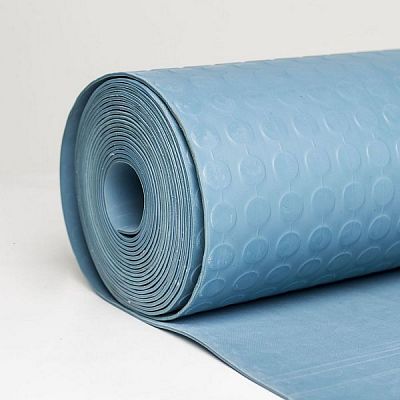
Our DEK insulating matting serves as a permanent safety foundation for any high-voltage room or substation. We design these floor coverings to provide a stable, non-slip surface that isolates the operator from the earth's potential. By standing on a certified mat, the technician breaks the electrical circuit, preventing current from flowing through their body. This fixed protection remains in place year-round, ensuring every person entering the area enjoys an immediate level of baseline safety.
The following table details the standard specifications for our permanent DEK matting solutions:
|
Product (DEK Type) |
Class |
Thickness |
Application |
|
DEK 0 |
3.0 mm |
Standard low-voltage control rooms. |
|
|
DEK 2 |
3 mm |
Medium-voltage industrial switchgear. |
|
|
DEK 3 |
3.0 - 5.0 mm |
High-voltage substations up to 26.5 kV. |
We manufacture these mats using high-quality dielectric rubber that withstands heavy foot traffic and equipment weight. Unlike portable blankets, the DEK matting stays on the floor to define the safe operating zone in front of energized panels. We recommend regular cleaning of the matting surface to remove conductive dust or moisture that could bridge the insulation. Investing in high-grade matting provides a long-term safety solution that requires minimal maintenance while offering maximum peace of mind.
Blankets (EIP) – Flexible protection for fieldwork
Our EIP blankets provide the ultimate versatility for technicians who move between different job sites and complex installations. We engineer these products from highly pliable rubber compounds that allow for easy folding and draping over energized equipment. Field workers prefer these blankets because they can quickly secure them with specialized clamps to cover exposed busbars or terminals. Their lightweight construction ensures that carrying multiple units to a remote site or up a utility pole remains effortless.
In the field, environmental conditions vary wildly, but our blankets maintain their protective properties across a wide temperature range. We see our EIP series used in everything from roadside transformer repairs to emergency switchgear maintenance in manufacturing plants. Unlike fixed matting, these blankets follow the worker directly to the point of hazard, providing localized insulation exactly where it is needed most. This adaptability makes the EIP blanket an indispensable tool for any mobile electrical service team.
Industrial Applications
We supply our insulating blankets to a wide range of sectors where electrical infrastructure forms the backbone of operations. Our clients in the utility sector rely on these barriers to maintain power grids without disrupting service to thousands of customers. In large-scale manufacturing, maintenance teams use our blankets to service heavy machinery while nearby production lines remain active. These blankets facilitate complex technical tasks by creating a safe buffer zone in environments crowded with high-voltage equipment.
The versatility of Boguma blankets makes them suitable for a diverse array of industrial environments:
- Power Distribution: Technicians use them to shroud overhead line components and underground cable joints.
- Renewable Energy: Maintenance crews apply EIP blankets to inverter terminals and high-voltage battery racks in solar farms.
- Heavy Manufacturing: Electricians protect themselves while servicing motor control centers and industrial furnaces.
- Data Centers: Operators use low-voltage EIP blankets to safeguard sensitive server power supplies during upgrades.
- Electric Vehicle (EV) Infrastructure: Specialists utilize EIP blankets when servicing high-capacity DC fast-charging stations.
In every application, the primary goal remains the prevention of accidental contact and costly equipment damage. We observe that industrial facilities with standardized blanket usage protocols report significantly fewer electrical incidents. Our EIP series adapts to the specific spatial constraints of each industry, whether it involves a cramped naval engine room or a sprawling chemical plant. By integrating these blankets into your standard operating procedures, you ensure a consistent level of safety across all your technical departments.
How to Care for Your Electrical Insulating Blanket: Testing, Storage & Lifespan
Maintaining your protective equipment is just as important as choosing the right class for the job. At BOGUMA, we emphasize that a damaged blanket provides a false sense of security, which is extremely dangerous. We recommend establishing a strict maintenance schedule to ensure every piece of equipment remains in peak condition. Proper care extends the life of the rubber and ensures the dielectric barrier stays strong against high-voltage surges.
The following table summarizes the key maintenance activities required to keep your insulating blankets compliant and safe:
|
Activity |
Frequency |
Objective |
|
Visual Inspection |
Before every single use |
Identifies immediate physical damage like cuts or tears. |
|
Dielectric Testing |
Every 6 to 12 months |
Confirms the material still blocks the rated voltage. |
|
Cleaning |
After contact with contaminants |
Removes oils, grease, or dirt that could conduct electricity. |
|
Proper Storage |
Whenever not in use |
Prevents degradation from UV light, ozone, and heat. |
We advise all our clients to treat these blankets as precision safety instruments rather than indestructible rags. Even a microscopic pinhole allows electricity to arc through the material, potentially causing a fatal injury. You must train your staff to recognize the early signs of wear and to remove suspicious blankets from service immediately. By following these care guidelines, you maximize your investment and guarantee the safety of your technical personnel.
Regular Dielectric Strength Testing
Routine dielectric testing serves as the only definitive way to confirm that a blanket still possesses its insulating properties. Over time, factors like mechanical stress or invisible chemical changes can weaken the internal structure of the rubber. We recommend sending your blankets to a certified high-voltage laboratory at least once every twelve months. These specialists apply a controlled overvoltage to the material to ensure it does not puncture or leak current under pressure.
Our experience shows that even blankets that look perfect on the surface can fail a rigorous laboratory test. We track every piece of equipment in our facility to ensure no unit misses its scheduled re-certification date. If a blanket fails the dielectric test, you must destroy it immediately to prevent its accidental return to the field. Maintaining a detailed log of these test results ensures your company stays compliant with international safety regulations and labor laws.
Visual Inspection – What to Look For
A thorough visual check remains your first and most effective line of defense against electrical accidents. We instruct every technician to examine both sides of the blanket under a strong light before starting any task. You must stretch the material slightly to reveal hidden cracks or punctures that might stay closed in a relaxed state. This simple habit takes only a few minutes but prevents the use of compromised equipment that could lead to a tragedy.
During your inspection, you should immediately remove any blanket from service if you find the following defects:
- Cuts and punctures: Any break in the surface allows electricity to bypass the insulating layer.
- Ozone cracking: Fine, spider-web-like cracks indicate the rubber is becoming brittle and unsafe.
- Chemical swelling: Soft or sticky spots suggest the blanket touched oils or solvents that dissolved the rubber.
- Embedded objects: Small pieces of metal or gravel can act as conductors if they remain stuck in the material.
- Discoloration: Severe fading or spotting often points to heat damage or prolonged UV exposure.
We recommend using a systematic "roll and feel" technique to catch imperfections that the eye might miss. If you feel any change in the thickness or texture of the rubber, treat the blanket as potentially faulty. Never attempt to repair a damaged blanket with standard tape or patches, as these lack the necessary dielectric strength. Our policy at BOGUMA is clear: when in doubt, take the unit out of circulation and replace it with a new one.
Proper Storage (protection against ozone, UV, and oils)
Safe storage directly influences the longevity and reliability of your electrical insulating blankets. We emphasize that environmental factors like sunlight and humidity slowly degrade the molecular structure of high-quality rubber. Storing blankets in a pile or near heat sources causes permanent deformation and structural weakening. At BOGUMA, we suggest keeping these items in a dedicated, climate-controlled space to maintain their original dielectric properties.
The following table outlines the ideal storage conditions to maximize the lifespan of your safety equipment:
|
Factor |
Ideal Condition |
Reason for Protection |
|
Temperature |
10°C to 21°C |
Prevents the rubber from becoming brittle or overly soft. |
|
Light |
Dark or opaque containers |
Protects against UV radiation which causes surface cracking. |
|
Position |
Flat or rolled in bags |
Eliminates permanent creases that become weak points. |
|
Contaminants |
Away from oils and fuels |
Prevents chemical reactions that dissolve the polymer. |
We recommend using specialized storage bags made of heavy-duty canvas or synthetic materials for every blanket. These bags provide a secondary barrier against ozone and mechanical damage during transport to the job site. Never store blankets near electric motors or fluorescent lights, as these devices generate ozone gas that attacks the rubber. Proper organization in your warehouse ensures that your gear remains ready for immediate deployment in any emergency situation.
When to Replace Your Blanket – Lifespan and Signs of Wear
Determining the exact moment to retire an insulating blanket ensures that your safety standards never slip. We generally see a service life of several years, but this depends heavily on the frequency of use and environmental exposure. A blanket used daily in harsh outdoor conditions reaches the end of its reliable life much faster than one kept for occasional indoor maintenance. You must prioritize worker safety over the cost of replacement whenever the material shows even slight signs of aging.
We advise our clients to look beyond obvious holes and evaluate the overall elasticity of the rubber compound. If the blanket feels stiff, loses its flexibility, or shows "alligatoring" on the surface, its protective capabilities are likely compromised. Replacing a blanket at the first sign of structural fatigue prevents a catastrophic failure during a high-voltage operation. At BOGUMA, we believe that maintaining a fresh inventory of certified equipment is the most effective way to manage industrial risk and protect your human capital.
Maintenance & Testing
Our internal testing protocols ensure that every product leaving the BOGUMA facility meets the highest safety standards. We emphasize that maintenance does not stop at the factory gate; it continues throughout the entire life of the blanket. Consistent care prevents the accumulation of conductive residues that could compromise the surface resistance of the rubber. By treating maintenance as a core part of your workflow, you guarantee that your team operates with maximum protection every single day.
Effective maintenance involves several key steps that every safety officer should implement:
- Washing: Use mild soap and water to remove dirt, mud, and road grime after field use.
- Drying: Allow blankets to air dry completely before placing them back into storage bags.
- Degreasing: Remove any oil or grease spills immediately using approved rubber cleaners.
- Documentation: Mark each blanket with its next test date to ensure seamless compliance tracking.
- Decommissioning: Cut damaged blankets into small pieces to prevent anyone from using them by mistake.
We recommend using specialized cleaning agents that do not contain petroleum distillates or harsh solvents. These chemicals can weaken the rubber and reduce the dielectric strength of the Class 0–4 materials. Always rinse the blanket thoroughly to ensure no soap film remains on the surface. Proper maintenance ensures that the material stays supple and ready to provide a life-saving barrier during your next live-line project.
How to Choose the Right Electrical Insulating Blanket: Buyer's Guide
Selecting the appropriate insulating blanket requires a thorough assessment of your specific working environment and electrical risks. We advise our customers to analyze the maximum possible voltage they might encounter during a worst-case scenario. Choosing a blanket with a higher rating than necessary provides an extra margin of safety for your technicians. Our team at BOGUMA helps you navigate these choices to ensure you receive a product that matches your technical requirements perfectly.
The following table serves as a quick reference guide to help you choose the correct blanket based on your operational needs:
|
Factor |
Key Consideration |
Recommended Action |
|
Voltage Level |
Nominal vs. Maximum voltage |
Always select a class that exceeds the maximum voltage. |
|
Environment |
Presence of chemicals or ozone |
Choose Category A for acids or Category Z for ozone. |
|
Frequency of Use |
Daily work vs. emergency backup |
Invest in higher durability for frequently used items. |
|
Available Space |
Size of the equipment to cover |
Match the blanket dimensions (e.g., 1.0x0 vs 1.5x0) to the area. |
We recommend involving your lead technicians in the selection process to understand the practical challenges they face in the field. A blanket that is too large might become cumbersome in tight spaces, while one that is too small leaves dangerous gaps. We provide various sizes and classes to ensure you find the exact fit for your switchboards or transformers. Making an informed purchase today prevents safety compromises and additional costs in the future.
How to Determine the Right Voltage Class for Your Project
Determining the correct voltage class involves identifying the maximum phase-to-phase voltage of the system you intend to cover. We always recommend that you follow the principle of the highest potential risk rather than the nominal operating voltage. Using a Class 0 blanket on a system that might experience spikes above 1,000V AC endangers the life of the operator immediately. Our technical experts suggest reviewing the electrical diagrams of your facility to confirm the peak voltage levels before placing an order.
Safety regulations often require a specific buffer between the rated capacity of the PPE and the actual working environment. We manufacture our blankets to handle the specific stresses of each class, but the user must ensure the application remains within these boundaries. If your project involves multiple voltage levels, it is often safer and more efficient to standardize on a higher class for the entire team. This approach eliminates the risk of a technician accidentally grabbing a low-voltage blanket for a medium-voltage task.
Acid-Resistant (A) vs. Ozone-Resistant (Z) – Which Is Right for You?
The chemical composition of your insulating blanket determines how well it survives in specific industrial climates. We develop specialized rubber blends because a single material cannot resist every environmental threat effectively. If you work in an environment where battery acid or corrosive cleaning agents are present, the material must withstand chemical degradation. Without this specific resistance, the rubber softens and loses its dielectric strength, which puts the worker at direct risk.
We help you decide between these categories by evaluating the primary threats at your job site:
- Choose Category A (Acid-Resistant): This is essential for battery storage rooms, laboratory settings, and chemical processing plants.
- Choose Category Z (Ozone-Resistant): This is necessary for outdoor work, high-altitude regions, and areas near high-voltage equipment that generates corona discharge.
- Chemical Stability: Category A prevents the rubber from "melting" or becoming tacky when it touches electrolyte spills.
- Weathering Protection: Category Z prevents the brittle cracking caused by atmospheric gases, ensuring the blanket remains flexible during winter.
- Safety Longevity: Both categories ensure that the physical barrier does not fail due to environmental exposure during a long-term project.
We often recommend Category Z for general utility work because ozone is a silent killer of standard rubber products. Even if you do not see chemicals, the air around high-voltage conductors naturally contains ozone that attacks the polymer chains. If your facility handles both chemical and high-voltage risks, our team can provide guidance on the most robust hybrid solutions. Selecting the right category today ensures your safety equipment does not become a liability in six months.
Size & Dimensions – EIP0-1,0x0 vs. EIP0-1,5x0
Choosing the correct dimensions for your insulating blanket is a balance between adequate coverage and ease of handling. We offer different sizes to ensure that you can effectively shroud the hazard without having excess material interfering with your movements. A blanket that is too small leaves edges exposed, creating a "leakage" path for electricity, while a blanket that is too large can be heavy and difficult to secure in tight enclosures.
The following table compares our standard sizing options to help you determine which fits your workspace best:
|
Model Designation |
Dimensions (m) |
Surface Area |
Best Use Case |
|
EIP-1,0x0,6 |
1.0 x 0.6 m |
0.6 m2 |
Small switchgear, terminals, and individual bushings. |
|
1.0 x 1.0 m |
1.0 m2 |
Standard industrial panels and medium busbar sections. |
|
|
EIP-1,2x1,2 |
1.2 x 1.2 m |
1.44 m2 |
Large distribution transformers and open-air conductors. |
|
1.5 x 1.0 m |
1.5 m2 |
Long horizontal busbars or wide equipment racks. |
We recommend measuring the most common equipment in your facility before purchasing. For long, narrow applications like vertical cabling, the 1.5x1.0 format is often the most efficient choice, as it provides extended reach. If you are working in highly confined spaces, the more compact 1.0x0.6 model allows for precise placement without the need for excessive folding. Always ensure there is at least a 10 cm overlap beyond the energized part to account for potential movement or slipping during the task.
Conclusion: The Boguma Commitment to Electrical Safety
At BOGUMA, we believe that every worker deserves to return home safely at the end of the day. Our electrical insulating blankets are more than just rubber products; they are the result of decades of engineering expertise and a deep understanding of the risks inherent in high-voltage environments. By adhering to the most stringent international standards and utilizing advanced manufacturing techniques, we provide our clients with a reliable first line of defense against electrical hazards.
We remain dedicated to continuous improvement and innovation in the field of dielectric materials. Our commitment to safety extends beyond the sale of a blanket, as we offer comprehensive technical support and guidance to ensure our equipment is used correctly. We understand the high stakes involved in your operations, and we take pride in being a trusted partner for utility companies, industrial plants, and electrical contractors worldwide.
Choosing BOGUMA means choosing a legacy of quality and a future of safety. As the electrical landscape evolves with new technologies like renewable energy and electric vehicles, we will continue to adapt our products to meet these emerging challenges. We invite you to integrate our insulating blankets into your safety protocols and experience the peace of mind that comes from working with industry-leading protection.
Secure Your Operations with Certified Protection: Order Your Boguma Insulating Blankets Today
When it comes to high-voltage safety, there is no room for compromise or second-guessing. Choosing BOGUMA means you are partnering directly with a manufacturer that prioritizes rigorous adherence to the IEC 61112:2009 standard, ensuring every blanket provides a verified dielectric barrier. Our EIP series is engineered for the toughest industrial environments, offering you the perfect balance of flexibility for fieldwork and uncompromising strength against electrical failure. By integrating our certified blankets into your safety protocols, you are not just buying equipment—you are investing in a legacy of reliability and the ultimate protection for your most valuable asset: your people.
Don't leave your facility's compliance and worker safety to chance with generic distributors. Our technical team is ready to assist you in selecting the precise voltage class and resistance category (Acid or Ozone) tailored to your specific infrastructure needs. Whether you require standard dimensions like the EIP 1.0x0.6m for tight switchgear or custom solutions for large-scale utility projects, we provide the traceability and testing documentation your safety audits demand. Take the proactive step today to eliminate accidental contact risks and prevent costly arc flash incidents. View Boguma Electrical Insulating Blankets (EIP)
FAQ – Electrical Insulating Blankets
What is an electrical insulating blanket and how does it differ from electrical insulating matting?
While both serve as dielectric barriers, their application is entirely different:
- Insulating Blankets (EIP): These are flexible and portable. They are designed to be draped over, wrapped around, or clamped onto energized components (like busbars or terminals).
- Insulating Matting (DEK): This is intended for fixed floor placement. It provides a safe standing zone in front of switchboards to isolate the worker from the ground.
- The Verdict: Use matting for permanent area protection and blankets for targeted, mobile protection during active maintenance on the equipment itself.
What voltage classes are available and which one do I need?
The class corresponds to the maximum voltage the blanket can safely handle:
- Class 0: Up to 1,000V AC (Low voltage/Commercial)
- Class 1: Up to 7,500V AC
- Class 2: Up to 17,000V AC (Medium voltage/Industrial)
- Class 3: Up to 26,500V AC
- Class 4: Up to 36,000V AC (High voltage/Utilities)
Guidance: Always match the class to the highest potential voltage of the system, not just the nominal rating.
What do the IEC 61112:2009 certification and categories A and Z mean?
IEC 61112:2009 is the global benchmark for blanket quality.
- Category A (Acid-resistant): Best for battery rooms or chemical plants where the rubber might contact corrosive liquids.
- Category Z (Ozone-resistant): Essential for outdoor work or high-voltage areas where electricity creates ozone gas, which can cause standard rubber to crack.
How does an electrical insulating blanket protect against arc flash?
A blanket acts as a physical dielectric barrier that prevents an arc from forming in the first place by covering grounded or adjacent phases. However, it is not a standalone solution. It must be used as part of a PPE "ensemble" including arc-rated clothing and face shields to protect against heat and pressure if an incident occurs nearby.
What size do I need – EIP0-1,0x0 or EIP0-1,5x0?
- 1.0 x 0.6m: Best for tight enclosures, individual terminals, or small bushings where extra material would get in the way.
- 1.5 x 1.0m: Ideal for long horizontal busbars or wide equipment racks where you need continuous coverage.
Tip: Ensure at least 10cm of overlap beyond the live part to prevent "tracking" (electricity traveling around the edge).
How often should blankets be tested and by whom?
Blankets should undergo a professional dielectric test every 6 to 12 months (depending on local regulations). Tests must be performed by a certified high-voltage laboratory. Using an expired or untested blanket is a major safety violation and risks catastrophic failure.
What are the common signs of damage to look for?
Perform a visual inspection before every use. Immediately retire a blanket if you see:
- Cuts or Punctures: Even a pinhole is a path for current.
- Ozone Cracking: A "spider-web" texture on the surface.
- Chemical Swelling: Sticky or soft spots caused by oils.
- Deformation: Permanent creases or thinning of the rubber.
How should blankets be stored?
Rubber is sensitive. To maximize lifespan:
- Temperature: Store in a cool, dry place (10°C to 21°C).
- Light: Keep away from direct sunlight (UV) and fluorescent lights (Ozone).
- Position: Store flat or in a protective roll-up bag. Never fold them sharply, as this creates stress points.
Can they be used outdoors or in chemically aggressive environments?
Yes, but you must choose the right category. For outdoor use, Category Z is mandatory to prevent weather-related cracking. For chemical environments, Category A is required. Note that Class 0 blankets are generally thinner; for heavy industrial use, a higher class may offer better mechanical durability.
Where can I buy certified blankets that comply with IEC 61112:2009?
You should buy directly from a certified manufacturer like Boguma. Generic distributors often lack the traceability and batch-testing documentation required for high-stakes safety audits. At Boguma, every blanket is a documented safety tool, not just a commodity.
 IR Rubber and EUDR: Strategic Portfolio Expansion for Market Stability
 Electrical Floor Safety Solutions for Modern Electrical Rooms